Key Takeaways
- Time is Muscle: Reopening a blocked coronary artery within the first 60 minutes ("Golden Hour") preserves vital cardiac tissue.
- Chest pain is not the only sign—shortness of breath, cold sweating, radiating arm/jaw pain, or sudden dizziness require immediate emergency attention.
- Prompt emergency angioplasty (Primary PCI) at a equipped hospital is the single most effective treatment for acute heart attacks.
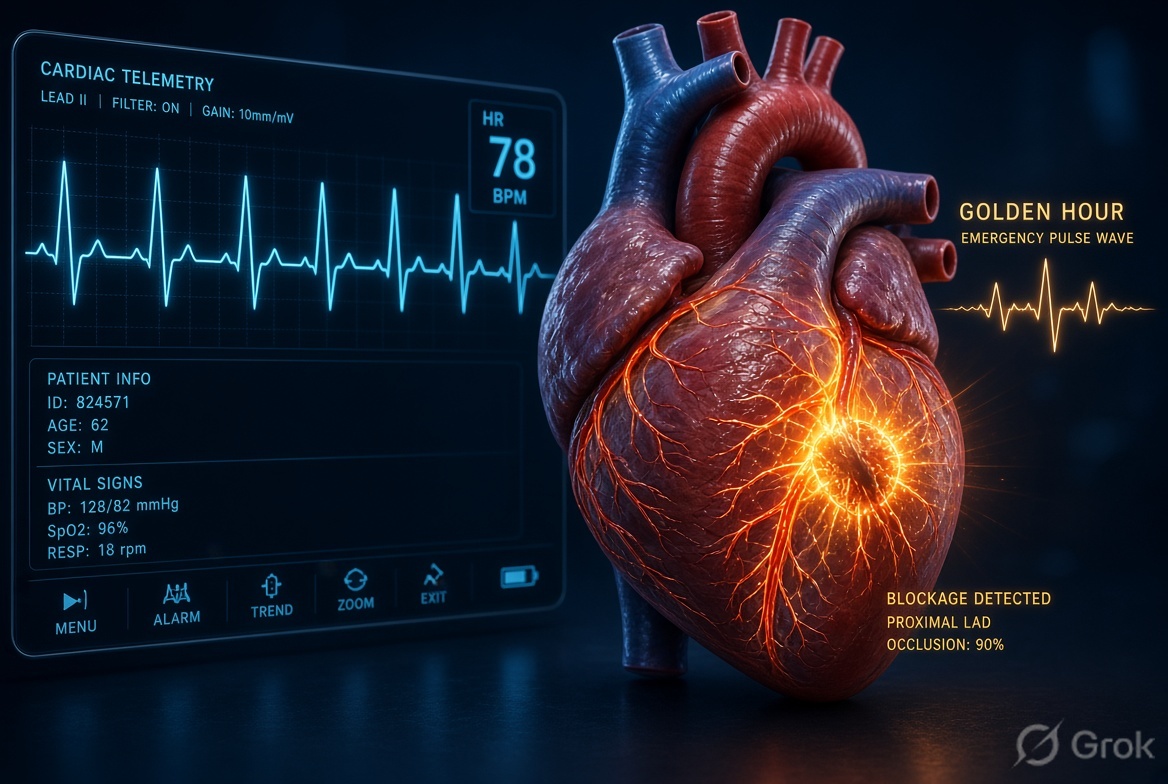
1. What Happens During a Heart Attack?
A heart attack, known medically as a Myocardial Infarction (MI), occurs when blood supply to a segment of the heart muscle becomes severely compromised or completely cut off.
This usually happens when an atherosclerotic plaque in a coronary artery ruptures, triggering a blood clot to form over the rupture site within seconds. Without immediate oxygenated blood flow, the affected heart muscle cells begin to suffer permanent damage within minutes.
2. Early Warning Signs You Must Never Ignore
Recognizing symptoms early is the difference between complete recovery and severe heart muscle impairment. Symptoms can build up over several hours or strike suddenly:
- Chest Tightness / Heavy Pressure: A feeling of intense squeezing, fullness, or central heavy weight in the chest that lasts more than a few minutes.
- Radiating Pain: Discomfort radiating to the left shoulder, left arm, neck, lower jaw, upper back, or upper abdomen.
- Unexplained Shortness of Breath: Difficulty breathing even while resting or doing minimal activity, with or without chest tightness.
- Cold Sweat & Dizziness: Breaking into a sudden clammy cold sweat accompanied by lightheadedness or nausea.
- Atypical Symptoms (Women & Diabetics): Female patients and individuals with longstanding diabetes frequently experience indigestion-like burning, extreme fatigue, or shortness of breath rather than classic crushing chest pain.
3. The "Golden Hour" Protocol in Cardiology
In emergency cardiac care, clinicians emphasize that "Time is Muscle."
The Golden Hour refers to the critical first 60 minutes following the onset of acute symptoms. If the blocked coronary artery is reopened using emergency Primary Angioplasty (PCI) within this narrow window:
- Over 85% of endangered heart muscle cells can be salvaged.
- The risk of post-attack heart failure or fatal cardiac arrhythmias drops exponentially.
- Hospital recovery time is significantly reduced.
4. STEMI vs. NSTEMI: Understanding Heart Attack Types
Cardiologists classify acute coronary events based on ECG (electrocardiogram) patterns and cardiac biomarker blood tests:
- STEMI (ST-Elevation Myocardial Infarction): The most severe form, caused by a 100% complete obstruction of a main coronary artery. Requires immediate emergency catheterization and stenting.
- NSTEMI (Non-ST-Elevation Myocardial Infarction): Caused by a partial or intermittent arterial obstruction. While urgent, treatment involves rapid medical stabilization followed by early angiography and targeted stenting.
5. What to Do Immediately in a Cardiac Emergency
- Call Emergency Helpline: Immediately call for medical assistance (+91 7980146952) or head to the nearest hospital with 24/7 Cath Lab facilities.
- Rest in a Seated Position: Sit down on the floor or bed supported by pillows to reduce the heart's workload. Do not try to walk around.
- Aspirin Administration: If advised by medical emergency staff and the patient has no known aspirin allergy, chew a single 300mg soluble Aspirin tablet.
- Do Not Drive Yourself: Never attempt to drive yourself to the emergency department while experiencing symptoms.
6. Long-Term Heart Attack Prevention Strategies
Up to 80% of premature cardiovascular events are preventable through proactive clinical management and lifestyle modification:
- Control Blood Pressure: Keep blood pressure under 130/80 mmHg with dietary salt reduction and tailored antihypertensive medication.
- Optimize Lipid Profile: Maintain LDL cholesterol below target guidelines (under 55 mg/dL for high-risk individuals) using statins if required.
- Blood Sugar Management: Keep HbA1c below 6.5% to prevent vascular damage.
- Smoking Cessation: Eliminate tobacco use entirely, as smoking accelerates arterial plaque rupture.
- Routine Cardiac Screenings: Undergo periodic ECG, Echocardiogram, and Treadmill Stress Tests as recommended by your cardiologist.
Frequently Asked Questions (FAQs)
The Golden Hour is the first 60 minutes after symptoms begin. Reopening the blocked artery with angioplasty during this time prevents permanent heart muscle death.
Yes. Atypical heart attacks without chest pain are common in diabetics, women, and the elderly, presenting as sudden breathlessness, cold sweat, jaw pain, or severe weakness.
Diagnosis is established within minutes of emergency room arrival using a 12-lead ECG, blood cardiac enzymes (Troponin I/T), Echocardiography, and immediate Coronary Angiography.